How To Increase Your Rate as a Freelancer in 2026

As someone who has earned over $140k freelancing from Nigeria, one thing I’ve learned is this: you’re paid what you’re worth.
Now, don’t misquote me. Sometimes, people will pay you less or more than your actual skill level. This simply means that your rate is not determined by skill alone.
Factors That Determine Your Rate
Your rate depends on four major factors:
- Your skill level
- The industry rate
- Your self-awareness
- Clients’ perception of your ability
Your Skill Level
Most people understand the first factor easily: the better you are at what you do, the higher your rate can be. This is why you must constantly improve your knowledge and sharpen your skills within your field.
The Industry Rate
The second factor is industry awareness. You need to know what is obtainable within your industry, country, and immediate environment. If you don’t know the range, you won’t know whether you’re undercharging, overcharging, or pricing yourself appropriately.
Your Self-awareness
The third factor, self-awareness, is your ability to accurately assess your own value per time. It’s not enough to know the industry rate; you also need to know where you fall within that range. You must be honest with yourself about your current skill level and use that clarity to determine what you’re worth.
Most of the time, to increase your rate, you have to increase your value. You have to offer more value. I say most of the time because there are exceptions. For example, changes in exchange rates or economic conditions can affect your pricing without any change in the value you offer. Your profession is still subject to the economic realities of your country.
Please don’t be deceived. Your core technical skill is different from the value you offer to a client. Your skill is just one part of the equation. The value you offer also includes how well you understand your client’s needs, your ability to communicate clearly, and how effectively you help them achieve their goals.
As you continue to learn and improve, there will come a point where you know you need to increase your rate. This isn’t about head knowledge; it’s about applied knowledge. You’ve implemented what you’ve learned, and it’s showing in your work.
At that point, you need to be strategic. You can’t just wake up one day and tell your clients you’ve promoted yourself and they must pay more. It doesn’t work that way.
What you should do instead is identify the specific areas where you’ve improved. List them out. Then, figure out how those improvements translate into better outcomes for your clients. After that, incorporate them into both your service delivery and your proposals.
Your proposal is what does the real work of increasing your rate.
Because you already have existing clients, you shouldn’t rely on just one proposal. Instead, create two or three service tiers. This allows you to serve clients who may not need (or can’t yet afford) your newly added value.
For example:
- Package 1: Core service delivery
- Package 2: Core service + additional strategic input
- Package 3: Core service + strategy + execution support
It can be as simple as that, and below is a real-world example.
Let’s say you’re a freelance professional helping businesses improve their online presence.
Package 1: Execution only
- You simply do what the client asks. They tell you what they want, and you deliver exactly that.
Package 2: Execution + strategic input
- You still deliver the work, but you also advise the client on what should be done and why. You help them avoid obvious mistakes and guide decisions based on your experience.
Package 3: Strategy + execution + ongoing support
- You help the client define the right approach from the start, execute it, and stay involved to monitor results, make improvements, and adjust along the way.
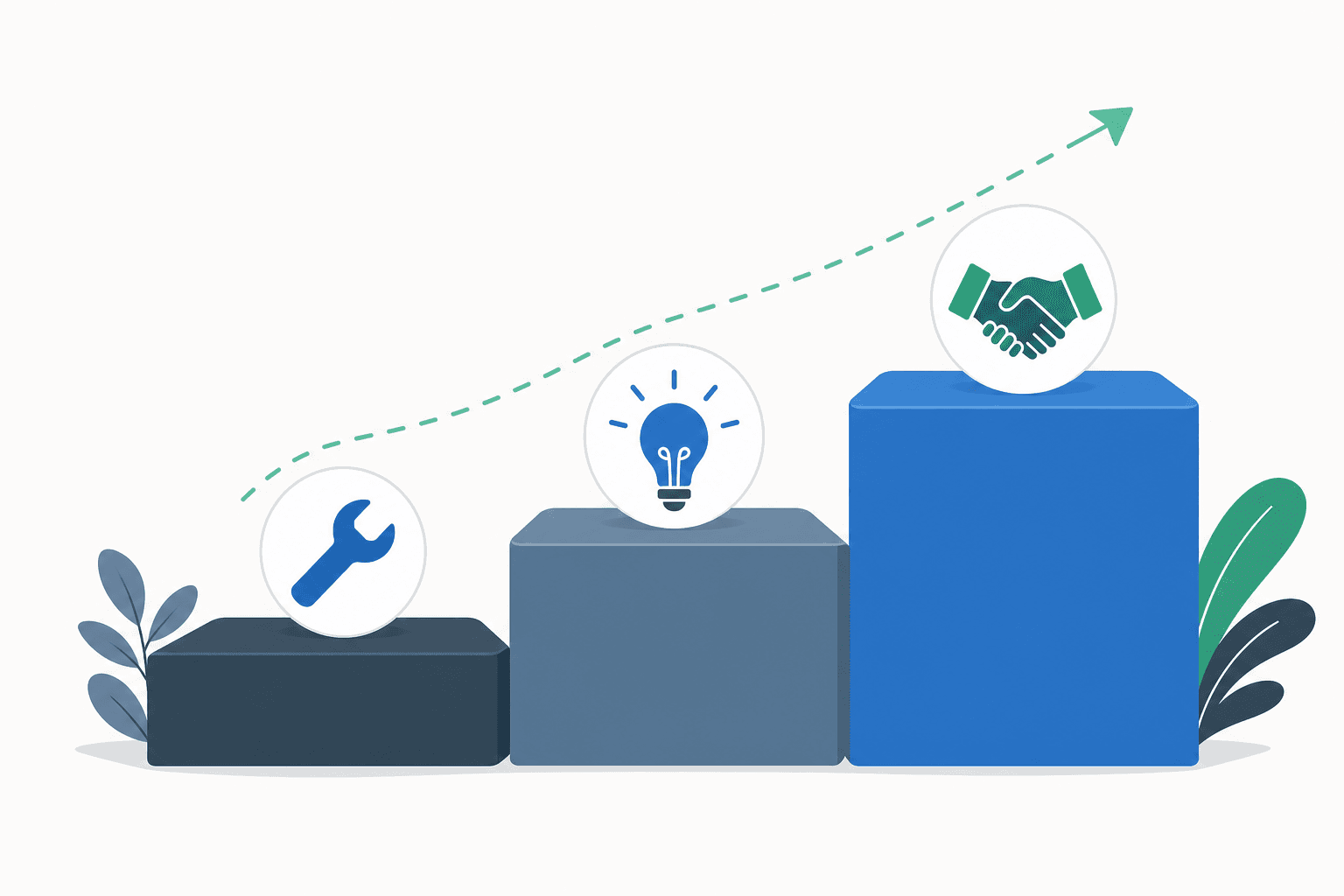
At the first level, you’re just hired hands.
At the second level, you’re a trusted contributor.
At the third level, you’re a partner in outcomes.
Think about it—why do most software companies offer tiered pricing? Because clients are not the same. Some need more, some need less. Tiered pricing helps you serve them all without boxing yourself into one rate.
When creating your proposals, don’t create too many options. Two or three is enough. Anything more than that can create unnecessary complexity for both you and your clients.
One major advantage of this approach is that it helps you retain your existing clients. If you suddenly increase your rate without offering alternatives, some clients may feel forced to leave. But when you give them options, they can grow into your higher-tier services over time.
This gradual transition also protects you psychologically. Losing clients immediately after increasing your rate can make you doubt yourself. A tiered approach allows you to increase your income without unnecessary stress.
As demand for your work increases and you start receiving more requests than you can handle (and if you don’t want to build an agency), you can begin to let go of low-paying clients. This frees up time and energy for higher-paying ones. Over time, your client base naturally shifts upward.
Now, let’s talk about the fourth factor: clients’ perception of your ability.
Clients’ Perception of Your Ability
You may have improved your skills and know it’s time to increase your rate, but perception still matters. Existing clients may notice your improvement easily, but prospective clients don’t know you yet. Even some existing clients may try to downplay the value you now bring and may want you to give them for free.
In such cases, presentation becomes crucial.
Here are four things you should focus on:
- Refine your portfolio
- Refine your website (if you have one)
- Refine your testimonials
- Refine how you present yourself overall
Everything about you should reflect your new level. Your portfolio should be updated and tailored to the type of clients you want to attract. If you’ve chosen to specialize, your work, messaging, and testimonials should clearly show that.
Collect new testimonials that align with your improved skills and target audience. Let your website or any public-facing platform reflect the professional you now are.
Increasing Your Rate For New vs Old Clients
When increasing your rate for existing clients, the jump doesn’t have to be drastic. A modest increase often works better. When the cost of finding and onboarding someone new outweighs the increase you’re requesting, clients are more likely to stay.
For new clients, however, you can set your rate based entirely on your current value. They have no reference point for your old pricing, so just make sure your rate aligns with what you truly offer.
From my experience, these are the core strategies for increasing your rates as a freelancer—regardless of your field.
Now, go and earn what you're worth.